Closing on a property used to feel like a marathon through a paper factory. You’d spend hours fighting traffic to get to a title office, sit in a room with uncomfortable chairs, and sign your name so many times your hand would cramp. It was a ritual. A long, tedious, ink-heavy ritual.
But things are shifting. The real estate world is finally catching up to the 21st century, and the star of the show is Remote Online Notarization (RON). If you haven't heard of it yet, you probably will by the time you're ready to sign your next deed. It’s the digital upgrade that’s making the "closing room" obsolete.
At Finest Closing Services, we’ve seen how much stress a traditional closing can add to an already high-stakes deal. That’s why we’re leaning into the future. Whether you’re a first-time homebuyer or a seasoned investor, RON is about to make your life a whole lot easier.
What Exactly is Remote Online Notarization?
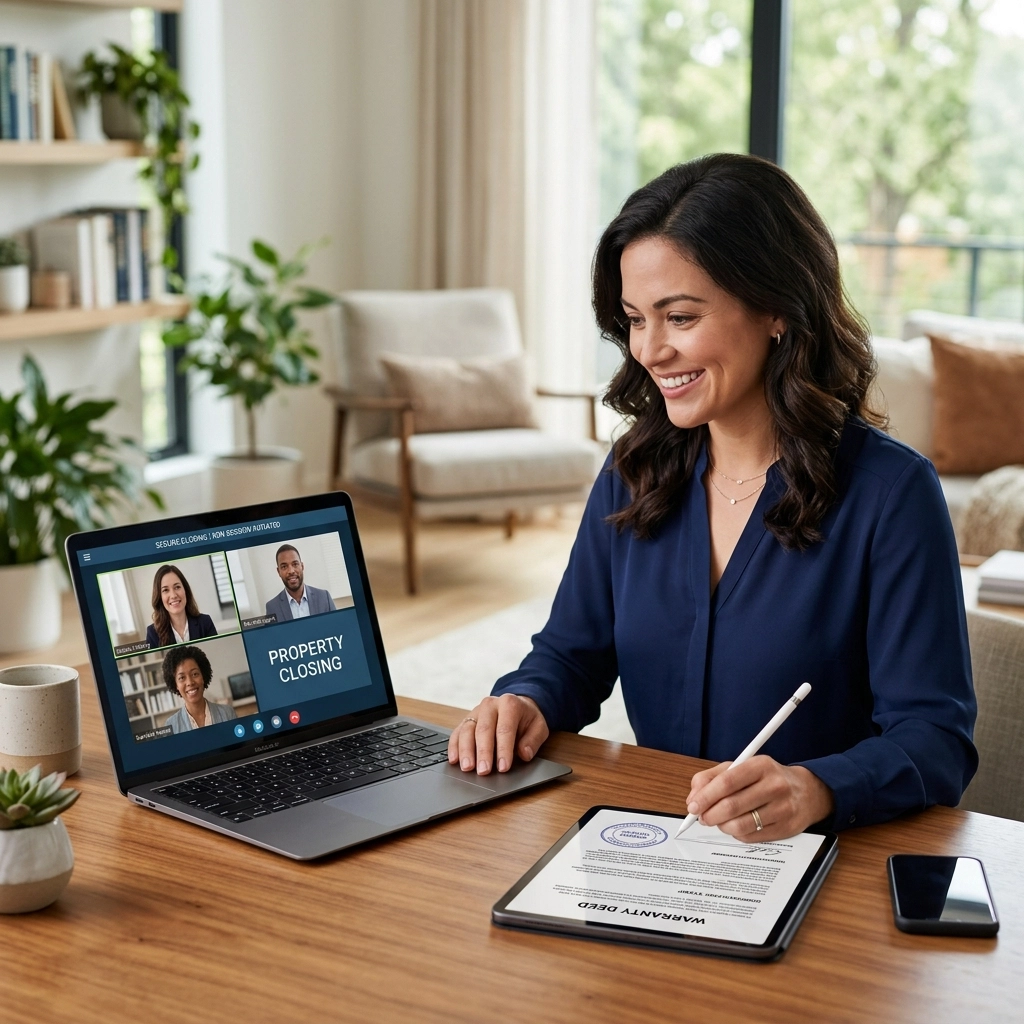
Think of RON as the "Zoom of the notary world," but with way more security and legal weight. Instead of meeting a notary in person to "wet-sign" documents with a pen, you meet them via a secure video call. You sign everything electronically, and the notary attaches a digital seal.
It’s fast, it’s legal, and it’s incredibly convenient. It looks like the days of hunting down a "notary near me" and hoping they have an opening at 2:00 PM on a Tuesday are coming to an end.

Why the Old Way is Starting to Feel… Old
Traditional closings have a few sticking points that just don’t fit into a modern schedule. First, there’s the logistics. If you’re selling a house in Florida but you’ve already moved to New York, getting those documents notarized can be a nightmare. You might have to find a mobile notary, wait for overnight shipping, and pray nothing gets lost in the mail.
Then there’s the "human error" factor. It’s easy to miss a signature when you’re flipping through a hundred pages of physical paper. If that happens, the whole process grinds to a halt. You can read more about these common pitfalls in our guide on 7 mistakes you’re making with closing paperwork.
RON essentially deletes these hurdles.
The Big Benefits of Going Digital
1. Close from Anywhere (Literally)
With RON, your location doesn’t matter. As long as you have a stable internet connection and a device with a camera, you’re good to go. You could be in your pajamas on your couch, at a coffee shop, or even on vacation. This is a game-changer for people relocating or for international investors who don't want to fly across an ocean just to sign a mortgage.
2. Security That Actually Works
It might seem like digital signatures are less secure, but it’s actually the opposite. RON uses "Credential Analysis" and "Knowledge-Based Authentication" (KBA). Before the session even starts, you have to verify your identity by answering questions that only you would know and uploading a photo of your ID that gets analyzed for authenticity. Every session is recorded, creating a robust audit trail that a physical signature just can't match.
3. Speed is the Name of the Game
Traditional closings can take hours when you factor in travel and document handling. A RON session often wraps up in about 15 to 20 minutes. When you're trying to hit a deadline, every minute counts. If you’re curious about how this compares to other options, check out our breakdown of RON vs. Mobile Notary.

How the RON Process Works (Step-by-Step)
If you're worried that the tech might be complicated, don't be. The process is designed to be as smooth as possible.
- The Invitation: Your closing coordinator or title company sends you a link to a secure RON platform.
- Identity Verification: You'll upload a photo of your government-issued ID. The system checks it for security features. Then, you’ll answer a few "out-of-wallet" questions (like "Which of these addresses have you lived at?").
- The Video Call: You’ll join a live video session with a licensed notary. They’ll confirm your identity and walk you through the documents.
- The Digital Signature: You’ll click to sign. No pens, no ink, no paper cuts.
- The Digital Seal: The notary applies their digital seal and certificate.
- Done: The documents are instantly available to all parties. No waiting for a courier or FedEx.
Is RON Legal Everywhere?
The short answer is: mostly. Since the COVID-19 pandemic, adoption has exploded. Most states have passed permanent RON legislation, but the rules can vary. For instance, some states require the notary to be physically located in the state, even if the signer isn't.
Before you bank on a RON closing, it’s a good idea to check with your lender and title insurer. Some traditional banks are still catching up to the tech, even if the state laws allow it. If you’re feeling overwhelmed by the technicalities, a closing coordinator can help navigate these requirements for you.

Who Benefits the Most?
- Home Buyers and Sellers: Especially those with busy work schedules or kids at home.
- Real Estate Agents: No more waiting at a title office for a late client. Everything stays on track.
- Investors: Manage a portfolio in a different state without leaving your office.
- Title Companies: It reduces the risk of missing signatures and speeds up the entire workflow.
If you’re wondering why everyone is talking about remote online notarization, it’s because it solves the biggest pain point in real estate: the friction of the final step.
How to Get Started
If your next closing is on the horizon, ask your title agent if they offer RON services. It looks like many pros are moving in this direction, but it doesn’t hurt to be proactive. If they seem hesitant, it might be time to look for a service that prioritizes efficiency.
At Finest Closing Services, we specialize in making sure the final signatures are the easiest part of your deal. Whether you need a loan signing agent or a full-service transaction coordinator to keep your timeline from falling apart, we’ve got your back.
Ready to simplify your next closing? Give us a call at (407) 305-0497 and let’s talk about how we can get your deal across the finish line without the headache.

Common Questions About Remote Online Notarization (Q&A)
Q: Do I need to download special software for a RON closing?
A: Usually, no. Most RON platforms are web-based. You’ll just need a modern browser (like Chrome or Safari), a working webcam, and a microphone.
Q: Is it safe to upload my ID to these platforms?
A: Yes, these platforms use high-level encryption to protect your data. The identity verification process is actually more rigorous than an in-person ID check because the software can detect fake IDs that the human eye might miss.
Q: Can I use RON if I am closing on a mortgage?
A: It depends on your lender. While many lenders now accept e-notes and RON, some still require "wet signatures" on specific documents. Always check with your loan officer early in the process.
Q: What happens if my internet cuts out during the session?
A: Don't worry. If the connection drops, the session is usually paused. You can log back in and resume where you left off once your connection is stable. The notary will ensure the recording reflects the full process.
Q: Does RON cost more than a traditional notary?
A: There is often a small technology fee associated with the platform, but when you factor in the money saved on travel, gas, and time off work, RON is usually the more cost-effective option.
Q: Can a transaction coordinator help me set this up?
A: Absolutely. A transaction coordinator can manage the communication between you, the notary, and the title company to ensure everyone is on the same page. You can learn more about how they fix workflow issues here.
If you’re tired of the old-school closing hassle, it’s time to try something better. Reach out to Finest Closing Services at (407) 305-0497 and let's make your next property closing a breeze.